The box says 8+, but many 6-year-olds play it just fine. Here is exactly what to expect at every age from 4 to 8, with practical tips for making it work with younger children.
Taco Cat Goat Cheese Pizza is officially rated 8+, but age is not the whole story. Most 6-year-olds can play with a little adult guidance. 5-year-olds are borderline — it depends on the child. 4-year-olds are generally too young to follow the word sequence reliably, though they love watching and doing the silly actions. The good news: no reading is required, and the physical actions (gorilla, narwhal, groundhog) make it genuinely fun even for kids who are still learning the rules.
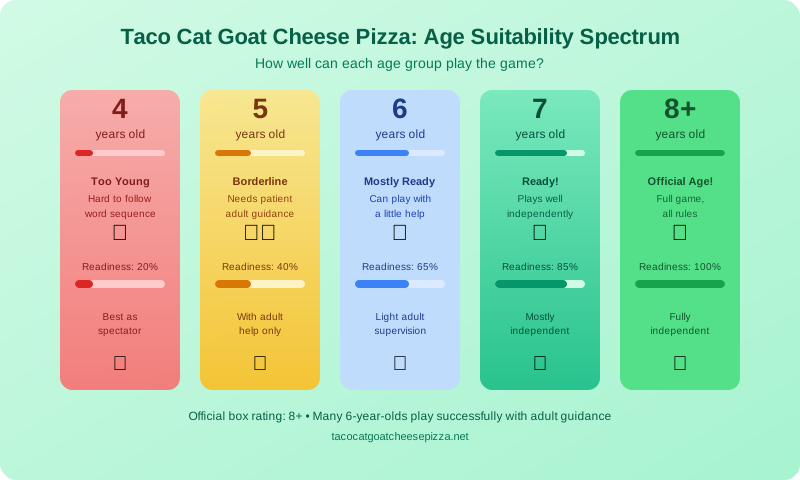
What to realistically expect at each age
| Age | Verdict | Can Follow Sequence? | Slap Timing | Special Actions | Adult Help Needed? |
|---|---|---|---|---|---|
| 4 years | Too Young | ✗ Rarely | ✗ Random | ✓ Loves them! | Yes — constant |
| 5 years | Borderline | ⚠ Sometimes | ⚠ Slow | ✓ Yes | Yes — frequent |
| 6 years | Mostly Ready | ✓ Usually | ✓ Getting there | ✓ Yes | Light guidance |
| 7 years | Ready | ✓ Yes | ✓ Good | ✓ Yes | Minimal |
| 8+ years | Official Age | ✓ Fully | ✓ Fast | ✓ Yes | None needed |
Recommendation for age 4: Let them watch and do the actions alongside the group. Try a simplified version where you skip the word sequence and just slap matching cards. Keep sessions under 10 minutes. Do not force it — if they are frustrated, take a break and try again in a few months.
Five-year-olds are in a wide developmental range. Some are ready; many are not. The key question is whether your child can hold a short sequence in their head while doing something else (flipping cards). This is called dual-task processing, and it varies a lot at age 5.
Can they remember a 5-word sequence? Test it: say “Taco Cat Goat Cheese Pizza” and ask them to repeat it. If they can, that is a good sign.
The game moves fast. Can your child wait their turn without grabbing cards? Patience is often the bigger challenge than the rules themselves.
In this game you gain and lose cards constantly. If your child handles small losses well, they will enjoy it. If not, expect some tears.
Recommendation for age 5: Try it with a patient adult sitting next to them, whispering the next word in the sequence when needed. Use a slower pace. Skip the penalty rules for wrong slaps — just laugh it off. If they enjoy it after two rounds, keep going. If they are confused or upset, wait a few months.
Age 6 is where the game really starts to click. Most 6-year-olds can hold the five-word sequence in memory, recognize the card pictures instantly, and understand the basic slap mechanic. They may need a reminder about the special action cards (gorilla, narwhal, groundhog) at first, but they pick it up quickly.
Recommendation for age 6: Play the full game with standard rules, but keep the pace relaxed. Sit next to them for the first round and remind them of the sequence. After one full game, most 6-year-olds are ready to play independently. Consider skipping the wrong-slap penalty for the first few games.
Make the game work for kids under the official age rating
There is no timer in this game. Play at a pace where the youngest player can keep up. Older players can always speed up once everyone is comfortable.
The official rule says wrong slaps mean you take the pile. For young kids, just ignore wrong slaps and keep playing. This removes a major source of frustration.
Sit next to the young player and quietly whisper the next word in the sequence when they hesitate. This scaffolding helps them learn without stopping the game.
Write “Taco → Cat → Goat → Cheese → Pizza” on a piece of paper and place it in front of the young player. They can glance at it when they forget.
Young kids love the gorilla, narwhal, and groundhog actions. Make a big deal of them. This keeps engagement high even when the word sequence is confusing.
Instead of playing until one person has all the cards, set a timer for 10 minutes and count cards at the end. Shorter games keep young kids engaged and prevent fatigue.
Before dealing cards, go around the table saying the sequence together a few times. Make it a chant: “Taco! Cat! Goat! Cheese! Pizza!” This primes the memory before the game starts.
Giving young kids the job of dealing makes them feel important and invested. It also gives them a moment to look at each card and reinforce picture recognition.
When a young child gets a correct slap, make it a big moment. Positive reinforcement keeps them motivated and builds confidence for the next round.
End the game while they are still having fun, not after they have melted down. Leaving on a high note means they will want to play again next time.
Every card has a clear picture. A child who cannot read at all can still play — they just need to recognize a taco from a cat, which most 4-year-olds can do easily.
The gorilla chest-pound, narwhal horn, and groundhog knock are physical and silly. Young children are naturally drawn to movement-based play, making these moments the highlight of every round.
A full game takes 15–20 minutes. Young children have short attention spans, and this game fits perfectly within that window — unlike longer games that drag on for an hour.
Unlike strategy games where adults always win, Taco Cat has a strong luck element. A 6-year-old can genuinely beat an adult, which is hugely motivating for young players.
Shuffle and deal. No boards, no tokens, no complex setup. Young children can help set up the game themselves, which builds ownership and excitement before the first card is flipped.
Most 4-year-olds are too young to follow the word sequence reliably. However, they can participate in a simplified version where you just slap matching cards, and they will love doing the gorilla, narwhal, and groundhog actions. Try again at age 5 or 6 for the full game experience.
Age ratings on game boxes are conservative estimates based on the full ruleset played at full speed. The 8+ rating ensures that most children at that age can play independently without adult help. Many 6-year-olds can play with some guidance, but the rating accounts for the full competitive experience.
No reading is required at all. Every card has a clear picture of a taco, cat, goat, cheese, or pizza. The word sequence is spoken aloud, not read from cards. This makes the game genuinely accessible to pre-readers, which is one of its biggest advantages for young children.
Start by practicing the word sequence together as a chant before dealing any cards. Then play a practice round where no one takes penalty cards — just focus on saying the right word and slapping at the right time. After one practice round, most 5-year-olds understand the basic mechanic and are ready to try for real.
Yes — this is one of the game's greatest strengths. A 6-year-old, a 10-year-old, and two adults can all play together and have a genuinely fun time. The luck element means younger players can win, and the silly actions keep everyone laughing regardless of age. It is an excellent family game for mixed-age gatherings.
Taco Cat Goat Cheese Pizza is one of the best family card games for mixed ages. Pick up a copy and see how quickly even your youngest player catches on.
View on Amazon →As an Amazon Associate we earn from qualifying purchases.
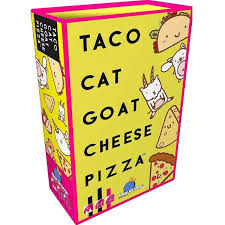
The wildly fast-paced card game that transforms your game night — now fully immersive in Spanish. Same hilarious chaos, nueva experiencia.
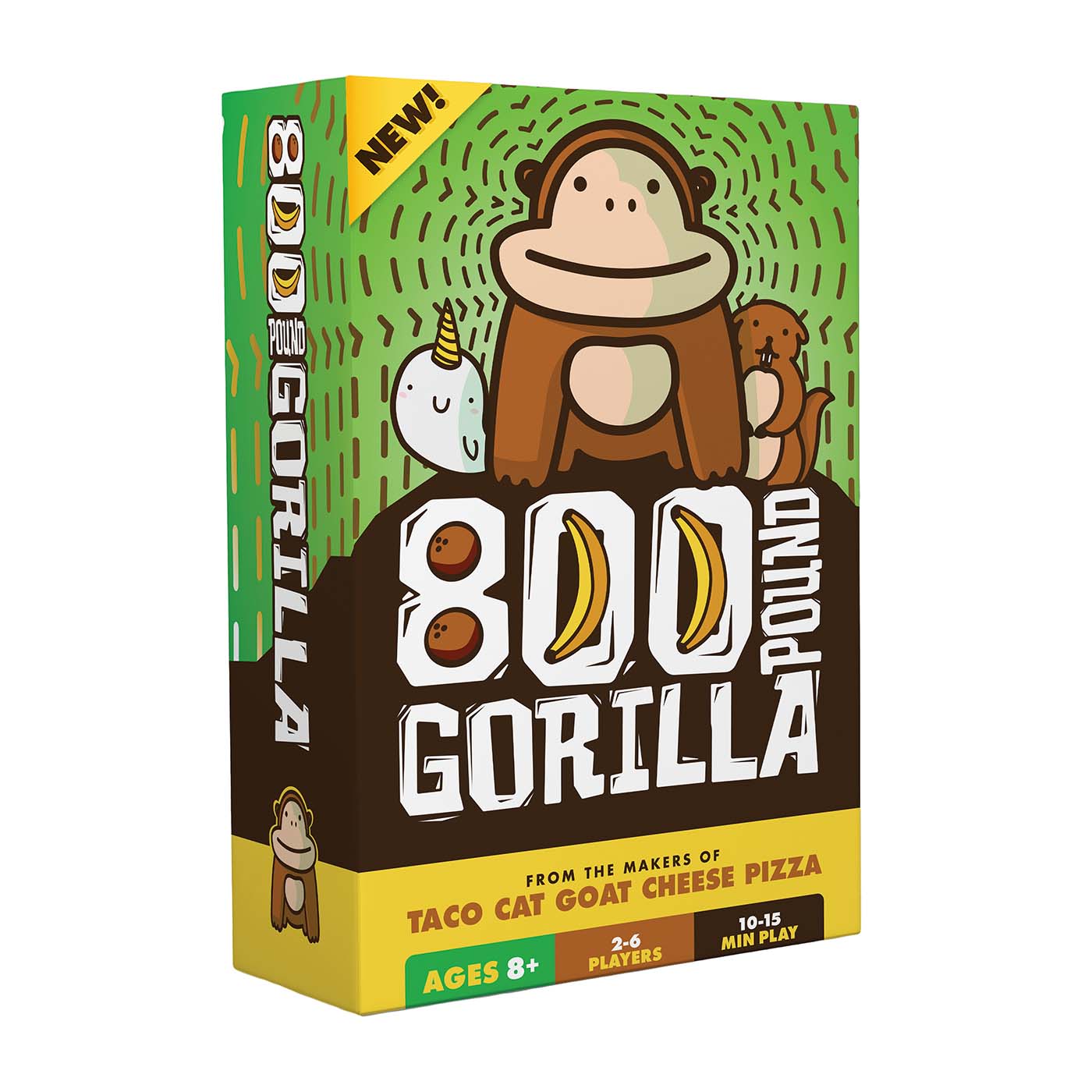
Taco Cat Goat Cheese Pizza gorilla refers to the popular card game Taco Cat Goat Cheese Pizza
Our privacy policy explains how we collect, use, and protect your information when you visit Taco Cat Goat Cheese Pizza Guide.
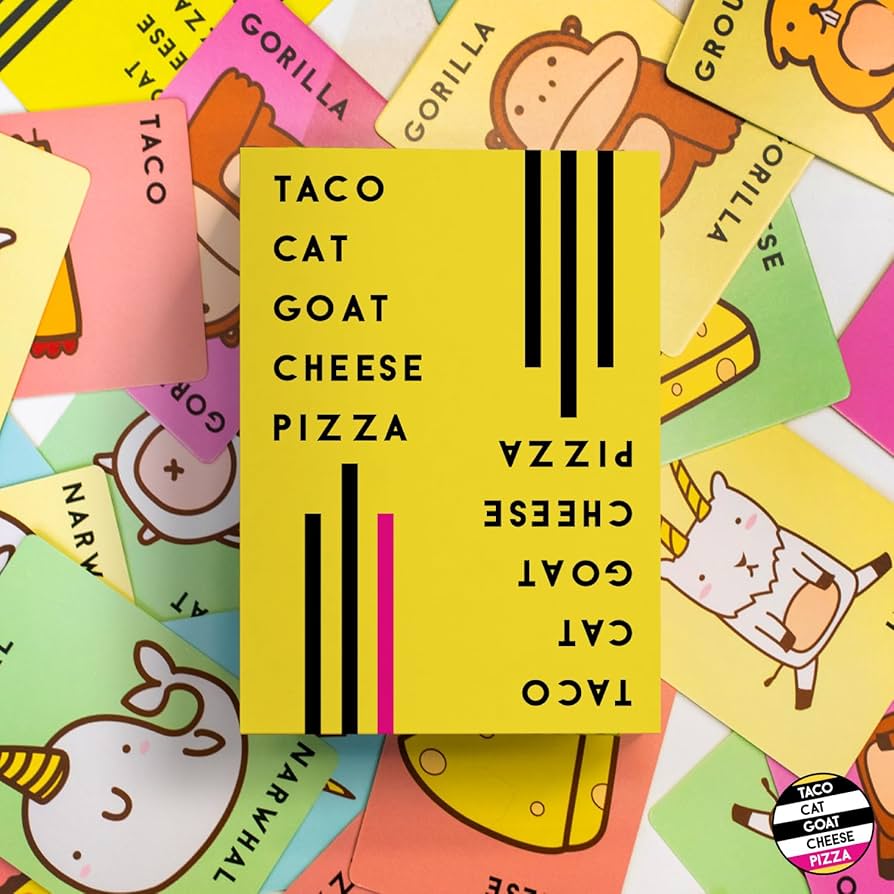
Complete Taco Cat Goat Cheese Pizza rules guide: setup, how to play, Taco Cat Goat Cheese Pizza chant sequence, special cards, penalties, winning conditions, FAQ, and printable PDF resources. Reviewed against the official rules PDF.
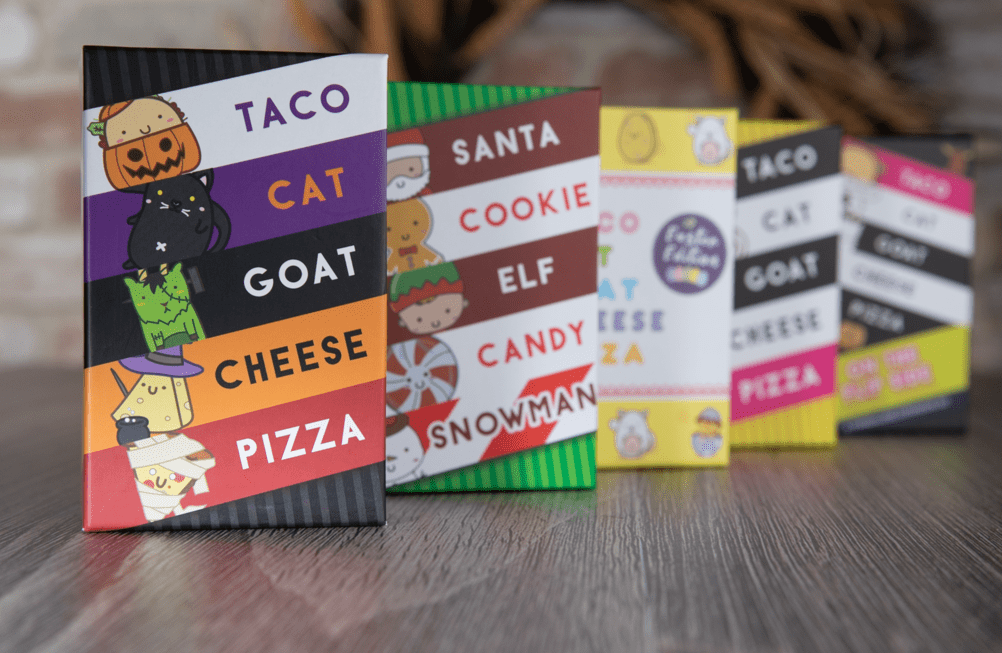
Thanksgiving Taco Cat Goat Cheese Pizza refers to the popular, fast-paced card game Taco Cat Goat Cheese Pizza, often played during holidays like Thanksgiving, with special themed editions (like Holiday or Poolside) and oversized versions available, all centered on matching cards to spoken words (Taco, Cat, Goat, Cheese, Pizza) and slapping the deck when a match occurs. It's a simple, silly, reaction-based game that makes for great family fun and stocking stuffers.
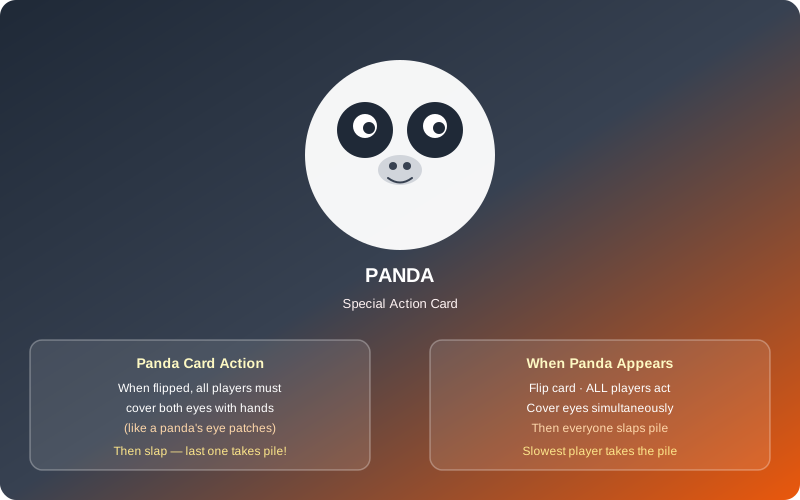
Complete guide to the Panda special action card in Taco Cat Goat Cheese Pizza. Learn what the Panda card is, which editions include it, how it changes gameplay, strategy tips, and how to add it as a house rule to any edition.