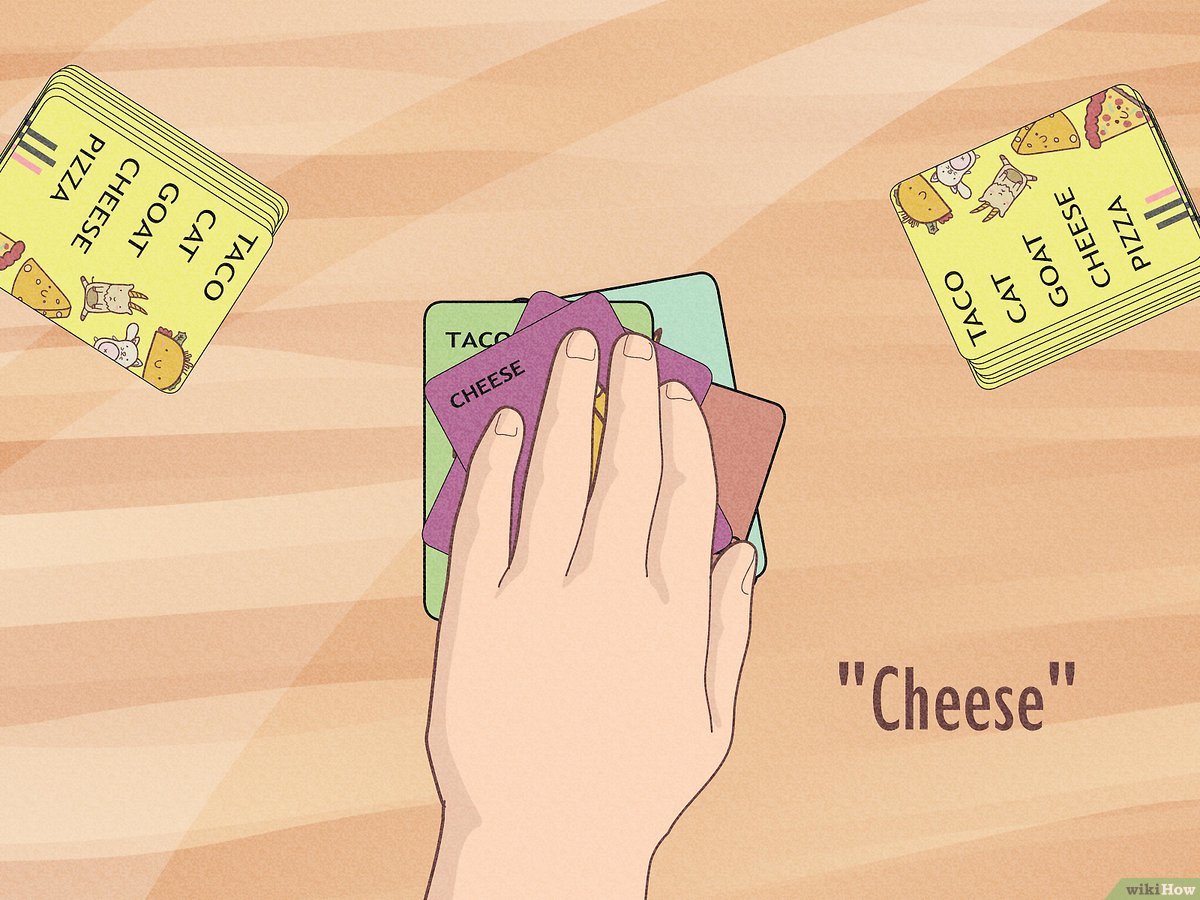
Proven strategies, expert tips, and winning techniques to help you dominate every round of Taco Cat Goat Cheese Pizza.
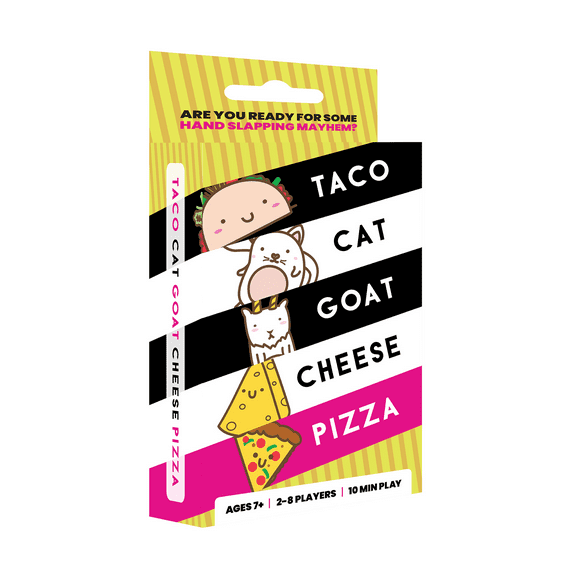
Before diving into strategies, you need to understand exactly what "winning" means in this game. Many new players misunderstand the victory condition.
Empty your draw pile first
Play every single card from your personal face-down draw pile into the central pile.
Survive one more round while empty-handed
After playing your last card, you must still say your word in the chant sequence on your turn. You are NOT safe yet.
Be first to slap on the next match or special card
The moment a match occurs or a special card appears, you must be the first person to slap correctly. If you're last, you take the pile and go back to having cards.
Critical rule most players miss: Running out of cards does NOT automatically mean you win. The game continues, and you must still say your word in sequence each turn — without flipping a card. You only win when a match/special card appears and you are the first to slap while having zero cards.
Winning consistently requires a mix of physical speed, mental awareness, and understanding the game's flow. Here are the proven strategies ordered by impact.
The single most important winning concept: you don't need to be the fastest, you just need to NOT be the slowest. Only the last person to slap takes the pile. If 5 people are playing and you consistently slap 4th, you will never pick up cards. Focus on being reliably average-to-fast rather than desperately trying to be first every time.
Human instinct is to look at people's faces during social games. Keep your eyes locked on the central pile. The moment you glance away to laugh or look at another player, you risk being the last to spot a match. The card image is the only thing that matters — train yourself to ignore everything else during flips.
Special cards (Gorilla, Groundhog, Narwhal) are where most players lose. The extra processing time — "What card is this? What action do I do?" — creates hesitation that gets people penalized. Drill the three actions until they become reflexive. When a special card flips, you should be performing the action before your brain consciously registers it.
| Card | Required Action | Speed Tip |
|---|---|---|
| 🦍 Gorilla | Beat chest with both fists | Quick double-tap, don't do a full drumroll |
| 🐿️ Groundhog | Knock table with both hands | Hands are already near the table — tap twice fast |
| 🐋 Narwhal | Hands together above head (horn shape) | Quick point upward, not a dramatic pose |
Saying the wrong word means you instantly take the entire pile — one of the most avoidable yet common penalties. The sequence is only 5 words: Taco, Cat, Goat, Cheese, Pizza. This should be burned into your brain. In the heat of the game with slapping and laughing, it's easy to lose track — but champions never do.
False slaps (flinching toward the pile when there's no match) are the #1 way beginners lose. Your brain, anticipating a match, sends a signal to your hand before it's confirmed. Train yourself to only move when you visually confirm a match or special card. It's better to be slightly slower than to slap incorrectly and take the entire pile.
Knowing the deck composition helps you anticipate what's likely. Out of 64 cards: 55 are standard (11 each of Taco, Cat, Goat, Cheese, Pizza) and only 9 are special (3 each of Gorilla, Groundhog, Narwhal). A match happens roughly 20% of the time (1 in 5 flips). Special cards appear about 14% of the time. After a match pile gets redistributed, everyone's odds reset — but tracking how many specials have been played gives you a slight edge on when to expect them.
| Card Type | Count | % of Deck | Odds Per Draw |
|---|---|---|---|
| Any single standard card | 11 | 17.2% | ~1 in 6 |
| Match (any standard match) | varies | ~20% | ~1 in 5 |
| Any special card | 9 | 14.1% | ~1 in 7 |
| Specific special (e.g., Gorilla) | 3 | 4.7% | ~1 in 21 |
The endgame is where most players choke. You've emptied your draw pile — now you need one clean slap to seal the win. Here's how to handle this high-pressure moment:
When you're out of cards, the temptation is to go hyper-aggressive. Don't. Keep the same steady pace, same hand position, same mental loop. Overeager players flinch and lose.
Even without cards to flip, you must say your word at the right time. Missing your turn or saying the wrong word while empty-handed costs you the win — you'll take the pile and go back to having cards.
Special cards in the endgame are both your best friend and worst enemy. They slow everyone down (everyone must do the action), which gives you time, but they also create chaos where others might flinch into you.
It's common to go in and out of "empty-handed" status several times before winning. Each time you're the last to slap, you take cards back. Stay mentally resilient — don't get frustrated.
Avoiding these common errors is often more important than having fast reflexes. Here are the most frequent ways players throw away a winning position:
| Mistake | Why It Happens | How to Fix It |
|---|---|---|
| False Slap (Flinching) | Brain anticipates a match that isn't there. Your hand twitches toward the pile. | Train: pause 0.1s after seeing the card before moving. Speed comes with practice — accuracy first. |
| Wrong Sequence Word | Losing track of the chant, especially after a slap reset or during chaotic moments. | Count on fingers under the table. Always reset to "Taco" after someone takes the pile. |
| Hesitating on Special Cards | Seeing a Gorilla/Groundhog/Narwhal and freezing because you can't remember the action. | Drill actions. Gorilla = chest. Groundhog = table. Narwhal = head. Make it automatic. |
| Peeking at Your Card | Looking at your card before flipping it, giving yourself an unfair head start. | Always flip the card away from yourself. Let others see it first. |
| Hand Too Far From Pile | Resting your hand on your lap or far from the center, adding precious inches of travel time. | Hover hand 2-3 inches above the pile at all times. Consistent position = consistent speed. |
| Getting Distracted | Laughing at a joke, looking at someone's reaction, or letting your focus wander. | Stay focused. A moment of distraction is all it takes to be last on a match. |
| Celebrating Too Early | Playing your last card and assuming you've won, causing you to miss the next slap. | Stay locked in after emptying your hand. The game is NOT over until you slap first. |
At its core, this game tests reaction speed. While some people are naturally faster, everyone can improve with targeted practice:
You win by being the first player to empty your draw pile AND then be the first to correctly slap the central pile on the next match or special card. Simply running out of cards is not enough — you must survive one more slap round while empty-handed. If you are the last to slap during that final round, you take the pile and must keep playing.
The game is roughly 70% skill (reaction speed, composure, pattern recognition) and 30% luck (which cards you receive, what order they come out). A skilled player will consistently beat beginners over multiple rounds, but in any single round, luck plays a significant role. The skill gap shows most clearly in avoiding penalties (false slaps, wrong words) rather than in pure slap speed.
Special cards (Gorilla, Groundhog, Narwhal) are your biggest scoring opportunity because they slow everyone down with the required action. The best strategy: drill the three actions until they become muscle memory — Gorilla = beat chest, Groundhog = knock table, Narwhal = hands above head. The player who hesitates least on special cards has a massive advantage. Most players lose on special cards because they freeze trying to remember the correct action.
Fast reflexes without control often leads to false slaps — slapping or flinching when there's no match. This is the most common reason fast players lose. The fix: train yourself to visually confirm a match before your hand moves. It's better to be the third-fastest correct slapper than the fastest incorrect slapper. Focus on accuracy first, then gradually build speed.
Yes, but indirectly. You can't directly "attack" other players, but maintaining a fast, steady rhythm pressures others into hesitating or saying wrong words. A sudden speed-up in your flip can throw off less focused players. Some experienced players also use fake-out motions (subtle hand twitches near the pile) to bait others into false slaps — though this tactic is considered poor sportsmanship by many groups.
The theoretical minimum is about 5-7 turns, but this requires extremely lucky card distribution. In practice, a typical round with 4-6 players lasts 5-10 minutes. The speed of a round depends on how many matches occur (each match redistributes cards) and how many special cards appear (which slow down each slap attempt). More players generally means longer rounds since there are more cards in circulation.
Basic card awareness helps, but full card counting is nearly impossible due to the speed of play and constant redistribution of piles. What is useful: track approximately how many special cards have appeared in the current cycle. If you've seen 2 of the 3 Gorillas and 2 of the 3 Narwhals, you know the remaining specials are more likely to be Groundhogs. This gives you a split-second edge on the action preparation.
Absolutely — and it happens all the time. Taco Cat Goat Cheese Pizza is one of the most age-balanced party games because it doesn't require strategy, vocabulary, or complex thinking. Kids often have naturally fast reflexes and fewer inhibitions about slapping hard and fast. Adults tend to overthink, hesitate on special cards, or hold back to avoid hurting their hand. If you're an adult playing against kids, you need to match their reckless energy.
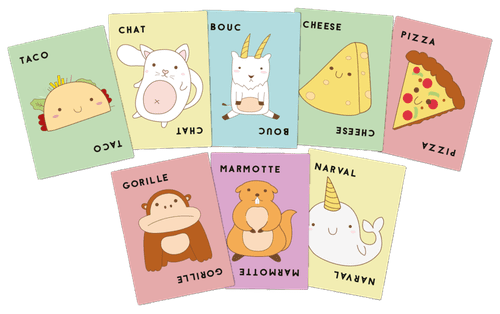
Taco Cat Goat Cheese Pizza includes 64 cards in the standard deck. It is designed for 2–8 players, where for 2–5 players, each is dealt 12 cards, and for 6–8 players, the cards are distributed equally.

To play Taco Cat Goat Cheese Pizza, players race to get rid of their cards by playing them face-up on a central pile in the sequence "Taco, Cat, Goat, Cheese, Pizza".
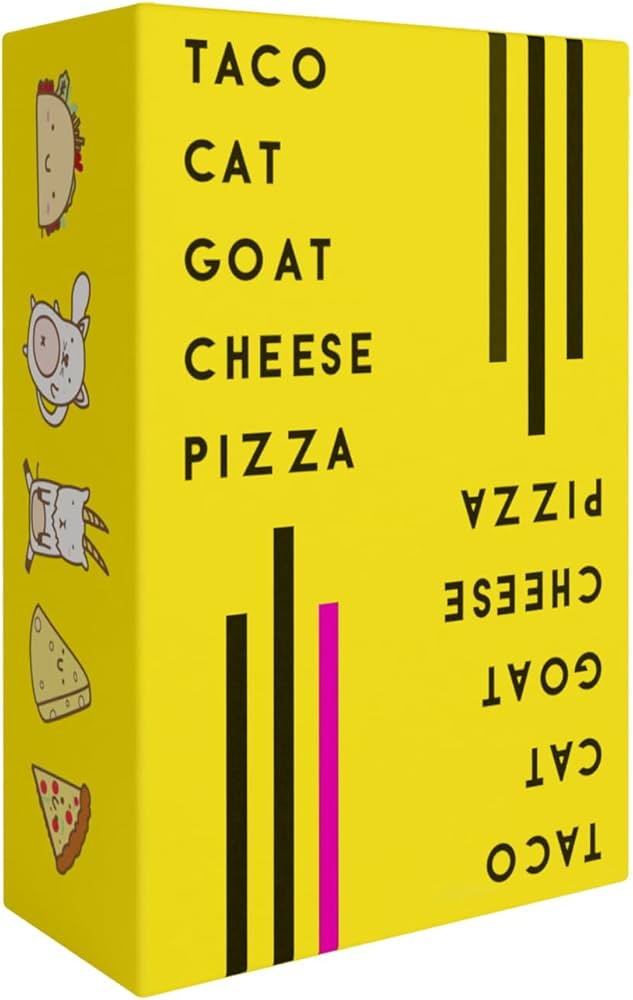
Taco Cat Goat Cheese Pizza is a highly rated, fast-paced, and chaotic card game ( stars on Amazon.com Amazon) perfect for parties and families.
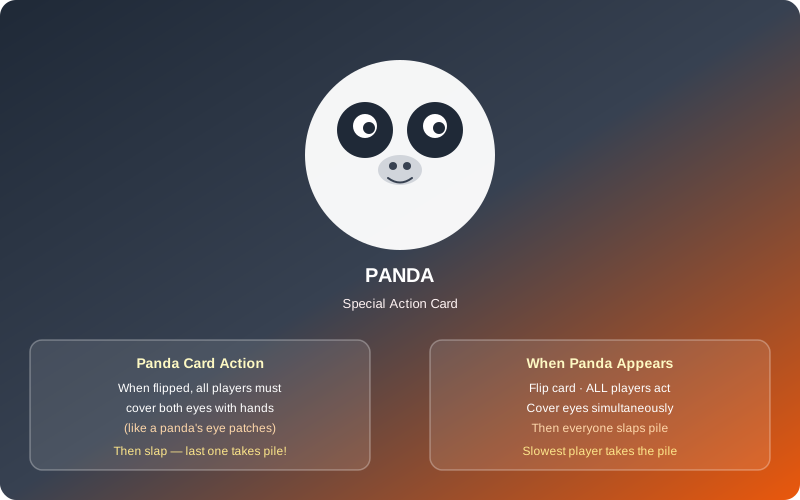
Complete guide to the Panda special action card in Taco Cat Goat Cheese Pizza. Learn what the Panda card is, which editions include it, how it changes gameplay, strategy tips, and how to add it as a house rule to any edition.
Taco Cat Goat Cheese Pizza gorilla refers to the popular card game Taco Cat Goat Cheese Pizza
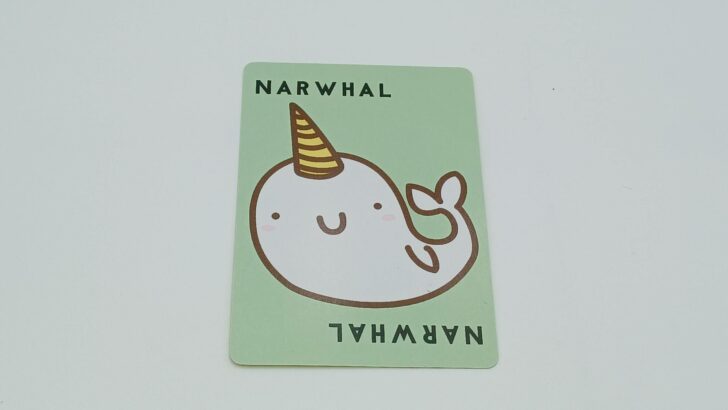
When a Narwhal card is played in Taco Cat Goat Cheese Pizza, all players must immediately slap their hands together above their head to form a "horn".