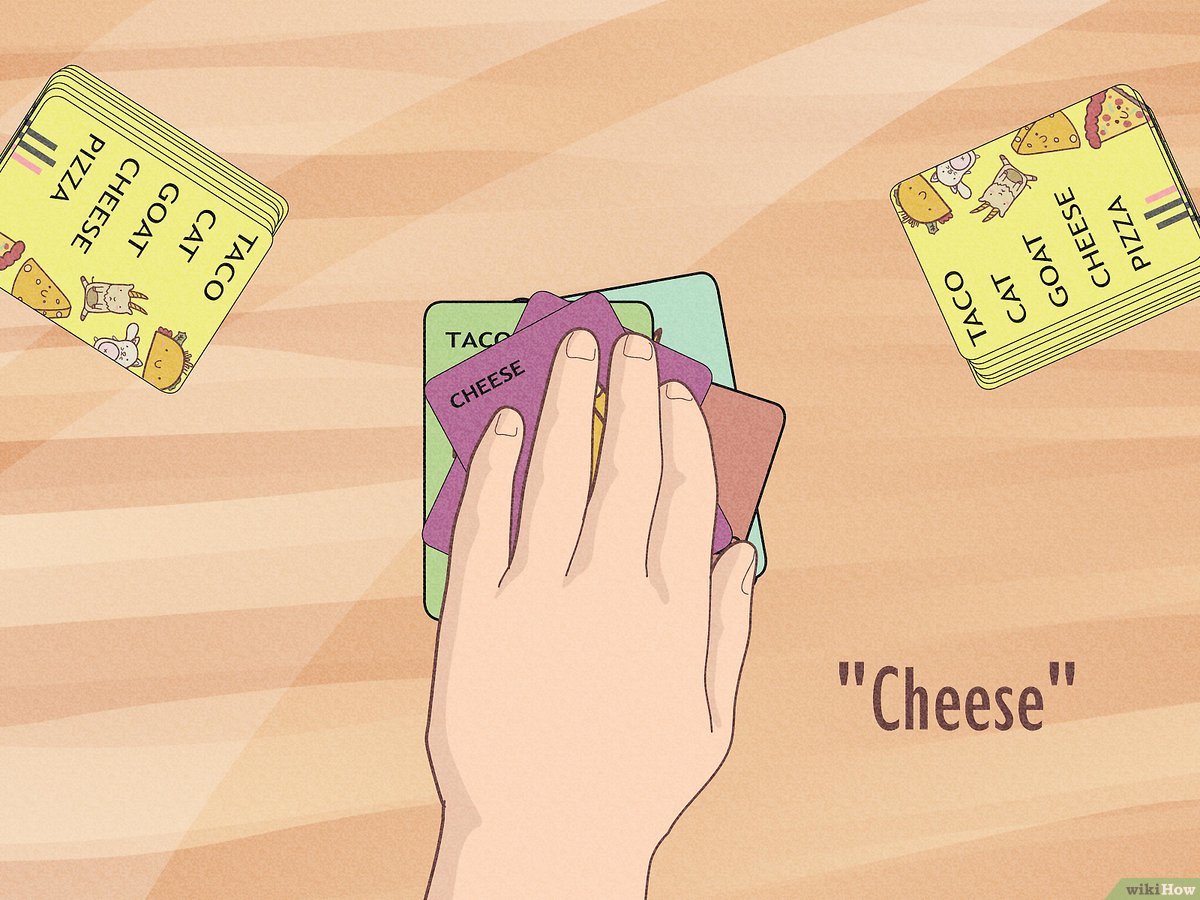
Yes — it is one of the fastest card games ever made. With simultaneous play, no turn order, and reaction times measured in milliseconds, a full 64-card deck can be played through in under 5 minutes.
Taco Cat Goat Cheese Pizza is extremely fast-paced. There are no turns — everyone acts simultaneously the moment a match occurs. Reaction time is measured in milliseconds, cards flip at a rate of one every 1-2 seconds, and a full 64-card deck can be played through in under 5 minutes. A complete game with 4 players runs 10-15 minutes. It is faster than Snap, faster than Spit, and in a completely different speed category from turn-based games like Uno or Catan.
Taco Cat ranked against other popular card games on a speed scale
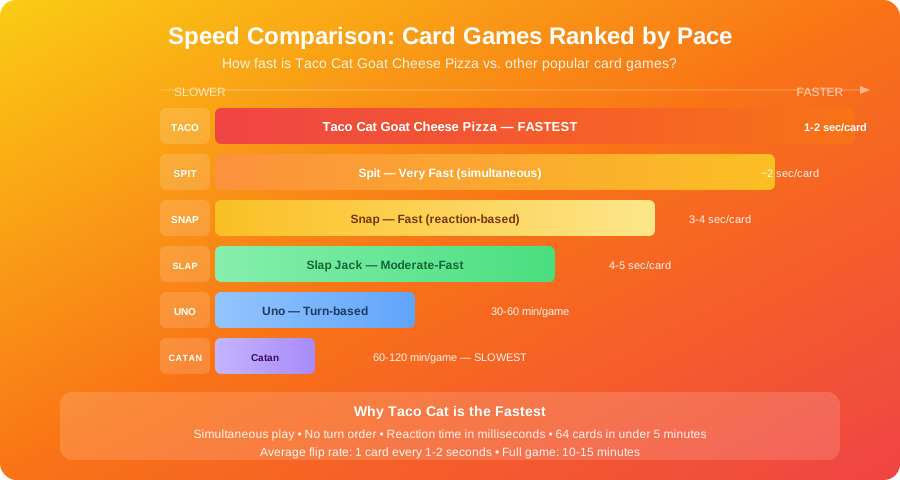
Card game speed comparison — Taco Cat Goat Cheese Pizza ranks at the top for pace and reaction time
Four design decisions that make Taco Cat the fastest card game at the table
In most card games, you wait for your turn. In Taco Cat, there are no turns. Every player is always active. The moment a match occurs — when the spoken word matches the card on the pile — every player at the table races to slap the pile at the exact same instant.
This eliminates the dead time that slows down every other card game. There is no sitting and watching while someone else takes their turn. You are always in the game, always alert, always ready to react.
Turn-based games slow down because players think before acting. Should I play this card? What is my opponent holding? In Taco Cat, there is no time to think. The decision is binary and instant: slap or do not slap.
This removes all cognitive delay from the game. Your brain does not need to calculate — it just needs to recognize a pattern and fire a motor response. That is why reaction time is measured in milliseconds, not seconds.
Cards flip at a rate of one every 1-2 seconds. Players say the words in sequence — Taco, Cat, Goat, Cheese, Pizza, Taco, Cat... — while flipping cards from their hand onto the center pile. The rhythm is relentless.
There are no pauses to draw cards, no shuffling mid-game, no waiting for someone to count their hand. The only breaks are the brief action card moments, which actually add to the pace by creating sudden bursts of activity.
Taco Cat is one of the few card games where physical speed matters more than mental strategy. The fastest hand wins each round, not the cleverest mind. This creates a completely different kind of engagement — pure athletic reaction.
Studies on reaction time show that simple visual-motor responses average 150-300 milliseconds. In Taco Cat, the difference between winning and losing a slap is often less than 100 milliseconds. That is faster than a blink.
Simultaneous play + instant decisions + continuous card flow + physical reaction = the fastest card game experience available. No other mainstream card game combines all four of these elements. That is why Taco Cat feels so different from everything else in your game collection.
A minute-by-minute breakdown of what happens during a standard 4-player game
Shuffle and deal takes under 60 seconds. Each player gets 16 cards face-down. No one looks at their hand. The game starts immediately.
Within the first 30 seconds, the spoken word sequence will match a card on the pile. The first slap happens. Someone wins the pile or takes a penalty. The energy spikes immediately.
Gorilla, Narwhal, and Groundhog cards trigger special actions. Everyone performs the gesture simultaneously. These moments last 2-3 seconds and then the game resumes at full speed.
By the 5-minute mark, one or two players are pulling ahead. The faster players have fewer cards; slower players have accumulated more. The gap creates urgency for everyone.
The leading player is down to their last few cards. Every flip is critical. The tension peaks as they approach zero. The game ends the moment one player successfully plays their last card.
The game ends. The loser immediately wants a rematch. Shuffle takes 30 seconds. Round two starts before anyone has time to check their phone. This is the Taco Cat loop.
At a flip rate of one card every 1-2 seconds, the full 64-card deck cycles through in 64-128 seconds — just over 1-2 minutes of pure flipping. But matches, slaps, penalties, and action cards add time. The realistic pace is 3-5 minutes for the deck to cycle through once, and most games involve 2-3 deck cycles before someone runs out of cards.
How Taco Cat stacks up against the most popular fast card games
| Game | Play Style | Reaction Required | Game Length | Speed Rating |
|---|---|---|---|---|
| Taco Cat Goat Cheese Pizza | Simultaneous, no turns | Milliseconds | 10-15 min | ⚡ Fastest |
| Spit | Simultaneous, 2-player | Under 1 second | 5-10 min | Very Fast |
| Snap | Reaction-based, turns | 1-2 seconds | 10-20 min | Fast |
| Slap Jack | Reaction-based, turns | 1-3 seconds | 15-25 min | Moderate-Fast |
| Exploding Kittens | Turn-based, strategic | Not required | 15-20 min | Moderate |
| Uno | Turn-based, strategic | Not required | 30-60 min | Slow |
| Catan | Turn-based, complex | Not required | 60-120 min | Slowest |
Spit is also simultaneous but only works with 2 players. Taco Cat supports up to 8 players at the same speed. For groups, Taco Cat wins easily.
Snap uses turns between slaps, creating dead time. Taco Cat eliminates turns entirely. The result is a game that feels 3x faster even though the reaction windows are similar.
Slap Jack only triggers on Jacks (4 cards in a 52-card deck). Taco Cat triggers on every 5th card plus action cards — far more frequent, far more exciting.
Practical techniques to improve your reaction time and win more slaps
Keep your hand hovering
Do not rest your hand flat on the table. Keep it slightly raised and ready to drop. The distance your hand travels to the pile is the main variable you can control. Hovering cuts your reaction time by 30-50 milliseconds.
Use your dominant hand
Your dominant hand is faster and more accurate. Hold your cards in your non-dominant hand and keep your dominant hand free for slapping. This sounds obvious but many players do the opposite.
Sit close to the pile
Position yourself so the center pile is within easy reach. Players who sit farther away have a measurable disadvantage. If you can choose your seat, pick the one closest to where the pile will form.
Relax your arm muscles
Tense muscles are slower muscles. Keep your arm relaxed between slaps. Tension builds up over a long game and slows your reactions. Shake out your hand between rounds.
Track the word sequence
The words cycle in a fixed order: Taco, Cat, Goat, Cheese, Pizza. Know which word comes next before the card is flipped. If you know the next word is Taco, you are already primed to recognize a Taco card the instant it appears.
Watch the card, not the player
New players watch the person flipping cards. Experienced players watch the center pile. The card is the trigger, not the person. Focusing on the pile reduces your visual processing time.
Do not second-guess yourself
The biggest speed killer is hesitation. If your instinct says slap, slap. The penalty for a wrong slap (taking 3 cards) is less costly than consistently losing correct slaps because you hesitated. Trust your pattern recognition.
Stay mentally present
Distraction is the enemy of reaction time. Do not check your phone, do not have side conversations, do not think about your next move. Full attention on the pile is the single biggest factor separating fast players from slow ones.
To improve your reaction time outside of a game, try this drill: shuffle the deck and flip cards one at a time, saying the word sequence aloud. Slap the table every time a match occurs. Time yourself through the full deck. Your goal is to complete the deck in under 90 seconds with zero missed matches. This trains both your pattern recognition and your motor response simultaneously.
Most players improve their in-game reaction time by 20-30% after just 10 minutes of this drill. The improvement comes from automating the word-to-card matching process so it happens below the level of conscious thought.
The speed is not for everyone — but for these player types, it is exactly what they want
Players who love to win and want a game where skill is immediately rewarded thrive in Taco Cat. The fast pace means every round is a fresh competition. There is no luck of the draw to blame — the fastest hand wins, period.
Competitive players often become obsessed with improving their reaction time and will play dozens of rounds in a single session trying to shave milliseconds off their slap speed.
Children aged 6-12 are the ideal audience for Taco Cat. The game moves fast enough to hold their attention, the physical slapping action is inherently satisfying, and the short game length means they never get bored before it ends.
The speed also levels the playing field between kids and adults in an unexpected way — children often have faster raw reaction times than adults, making this one of the few games where kids can genuinely beat grown-ups.
At parties, attention is split and energy is high. Taco Cat fits perfectly because it is loud, physical, and immediately engaging. New players can join mid-session, the rules take 2 minutes to explain, and the chaos of 6-8 people all slapping simultaneously is genuinely hilarious.
The fast pace also means the game never overstays its welcome at a party. Play a few rounds, laugh a lot, then move on to the next activity.
Not everyone wants to commit 2 hours to a board game. Taco Cat is the perfect card game for people who want a complete, satisfying game experience in 15 minutes. The fast pace means you can play multiple rounds in the time it takes to set up Catan.
Grandparents, parents, and kids can all play together because the game requires no reading, no complex strategy, and no prior knowledge. The fast pace keeps everyone engaged regardless of age, and the physical nature of the game creates shared moments of laughter that cross generational lines.
Three special action cards briefly pause the action — and make the fast parts feel even faster
When a Gorilla card appears, everyone must beat their chest like a gorilla before slapping the pile. This takes about 2-3 seconds and creates a moment of synchronized silliness.
Why it works: The brief pause creates anticipation. Everyone knows the slap is coming, which makes the race to slap feel even more intense.
The Narwhal card requires everyone to put their hands on their heads like a narwhal horn before slapping. Another 2-3 second pause that breaks the rhythm in a fun way.
Why it works: The physical gesture is inherently funny, especially when 6 people do it simultaneously. The laughter that follows resets the energy for the next fast sequence.
The Groundhog card has everyone peek under the pile before slapping. This creates a brief moment of suspense as everyone leans in simultaneously.
Why it works: The peek creates a shared secret moment. Everyone sees the same thing at the same time, which builds a brief sense of connection before the competitive slap.
Game designers call this the contrast effect. When everything moves at the same speed, the brain adapts and the pace feels normal. By inserting brief slow moments — the action card gestures — the game resets your perception of speed. After a 3-second gorilla gesture, the return to full-speed card flipping feels even faster and more exciting than before.
This is why the action cards are not just a fun gimmick — they are a core part of what makes the game feel so fast. Without them, the pace would feel monotonous. With them, every return to normal speed feels like an acceleration.
Common questions about the speed and pace of Taco Cat Goat Cheese Pizza
Yes, by most measures it is. The combination of simultaneous play (no turns), reaction-based mechanics, and a continuous card flip rate of one card every 1-2 seconds puts it at the top of the speed rankings for mainstream card games. The only games that rival it are 2-player simultaneous games like Spit, which do not scale to larger groups. For 3-8 players, Taco Cat is the fastest option available.
You need to react within about 200-400 milliseconds of a match occurring to consistently win slaps against experienced players. That is roughly the speed of a blink. The good news is that this is a trainable skill — most players improve significantly after just a few games. You do not need to be naturally fast; you need to be focused and practiced. Knowing the word sequence in advance and keeping your hand hovering are the two biggest factors.
For most casual players, the fast pace is exciting rather than stressful. The game is designed to be chaotic and fun, not competitive in a serious way. Mistakes are funny rather than costly, and the short game length means no one is stuck losing for a long time. That said, very young children (under 6) or players who dislike time pressure may find it overwhelming. For those players, a slower practice round at half speed is a good introduction.
Yes. There is no rule that says you must flip cards as fast as possible. Groups with young children or new players often play at a slower pace for the first round or two. The game still works perfectly at a slower speed — the mechanics are the same, just with more time between flips. As players get comfortable, the pace naturally increases. Most groups find they are playing at full speed by the second or third round without any conscious effort.
Partly, yes. Children aged 8-14 often have faster raw reaction times than adults because their nervous systems are still developing at peak speed. But the bigger factor is focus — kids tend to be fully engaged in the game while adults are often distracted. The fast pace rewards full attention, which children naturally give to games they enjoy. This makes Taco Cat one of the rare games where kids have a genuine competitive advantage over adults, which they absolutely love.
Pick up Taco Cat Goat Cheese Pizza and you will be playing your first round in under 5 minutes from opening the box. No setup, no waiting, just pure reaction-speed fun.
Simultaneous play • No turn order • Reaction time in milliseconds • Setup under 1 minute
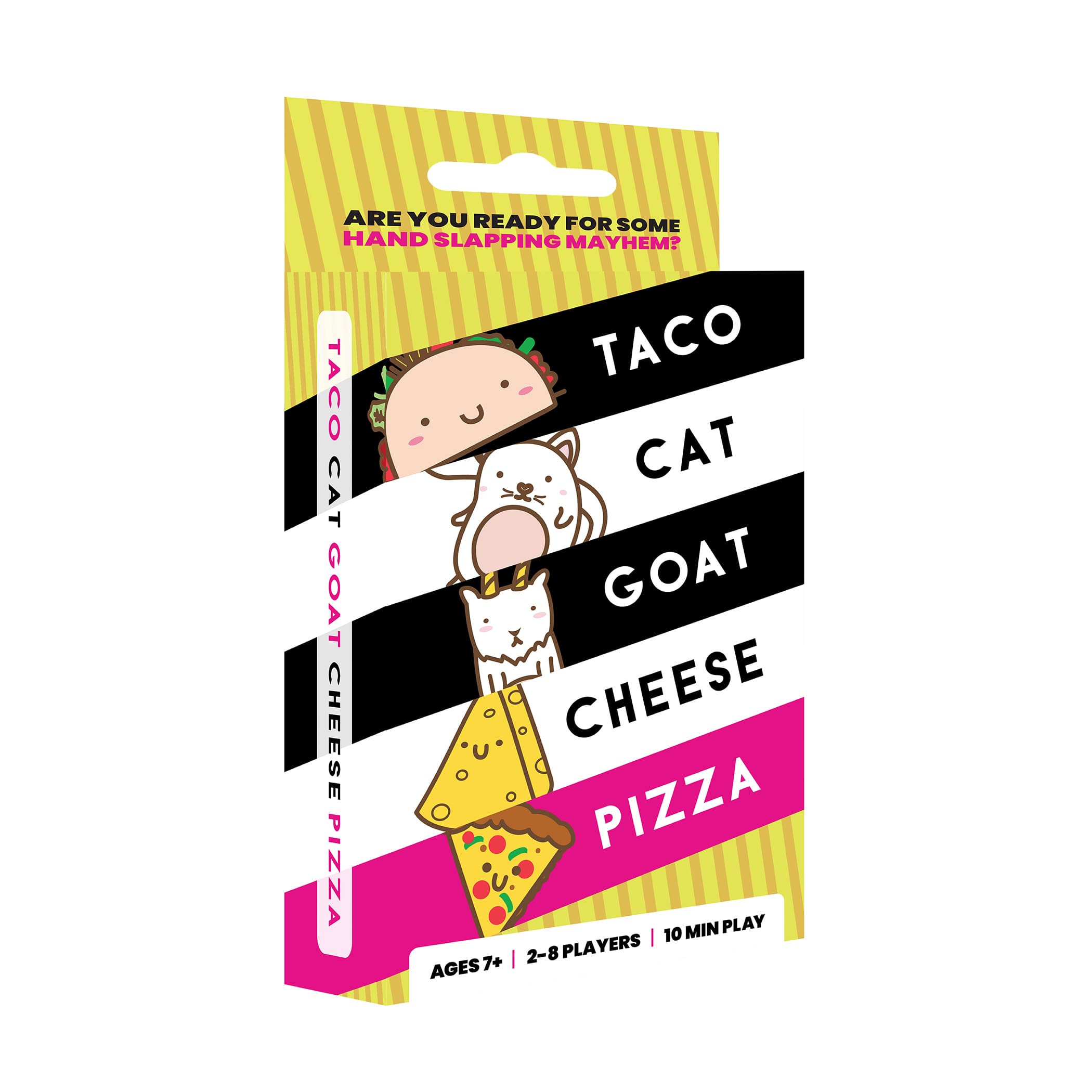
Taco Cat Goat Cheese Pizza is designed for 2 to 8 players.
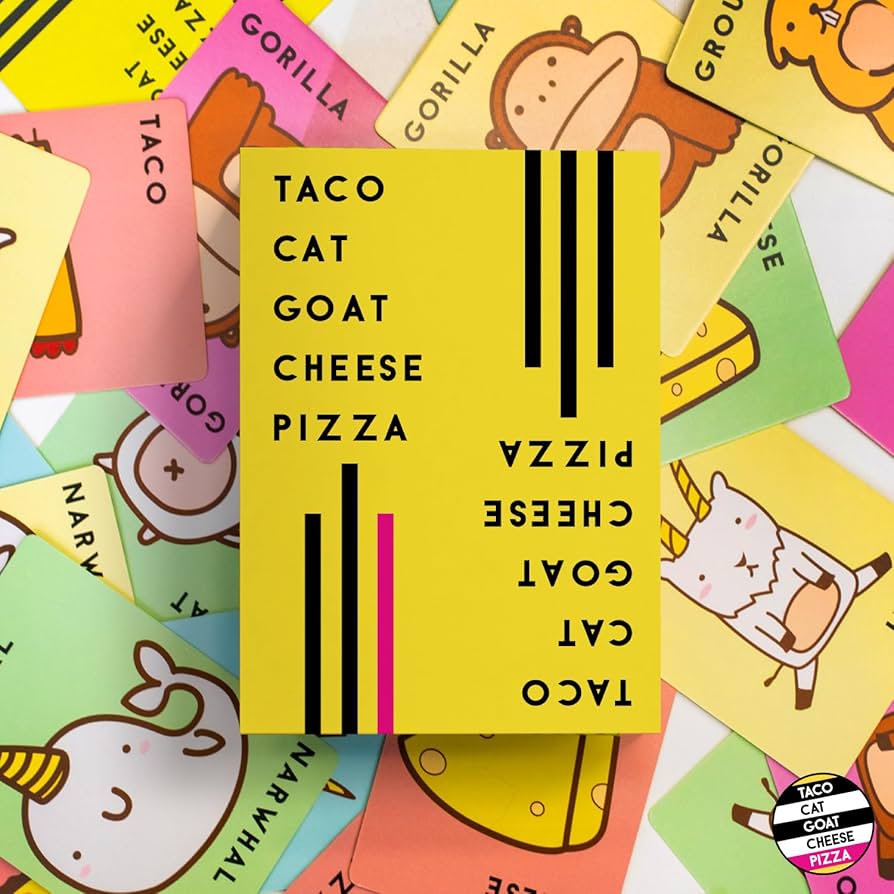
Taco Cat Goat Cheese Pizza is extremely popular, a viral sensation that consistently ranks as a top-selling, family-friendly card game on Amazon, selling millions of copies globally and achieving international success, even becoming an official game for the 2022 FIFA World Cup, praised for its simple, fast-paced, and laughter-inducing fun.
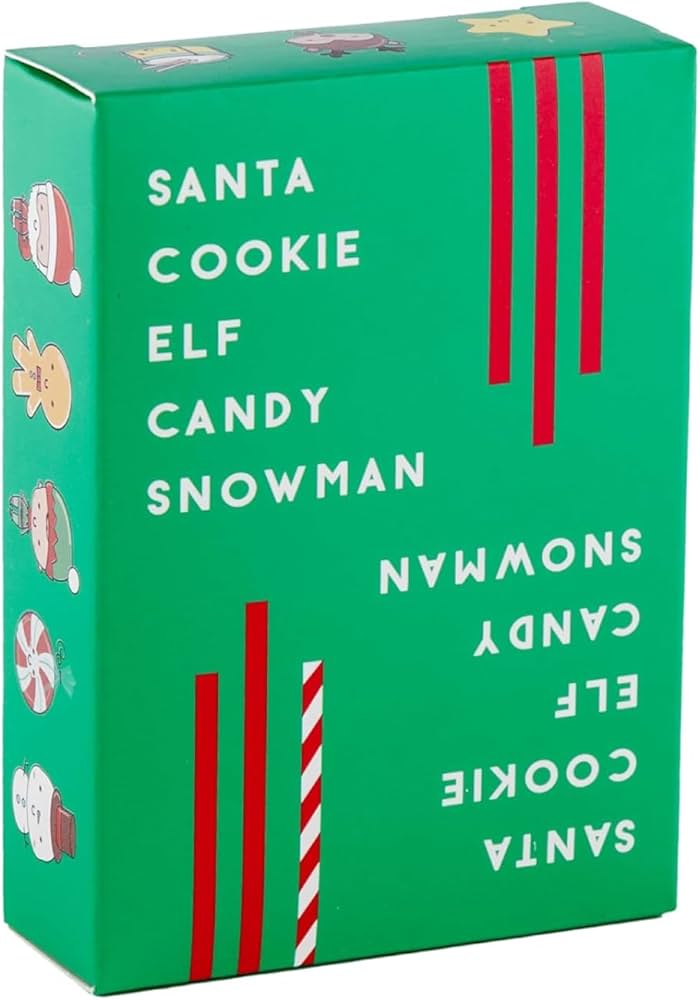
Santa Cookie Elf Candy Snowman is the official Christmas-themed version of the popular, fast-paced card game Taco Cat Goat Cheese Pizza.
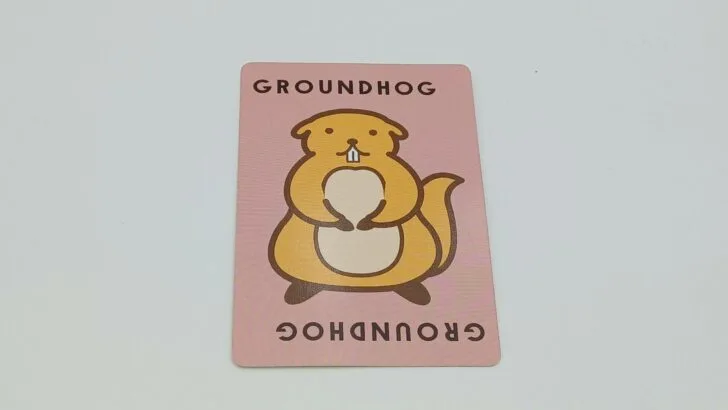
When the Groundhog card is played in Taco Cat Goat Cheese Pizza, all players must immediately knock/slap both hands on the table before attempting to slap the central pile.
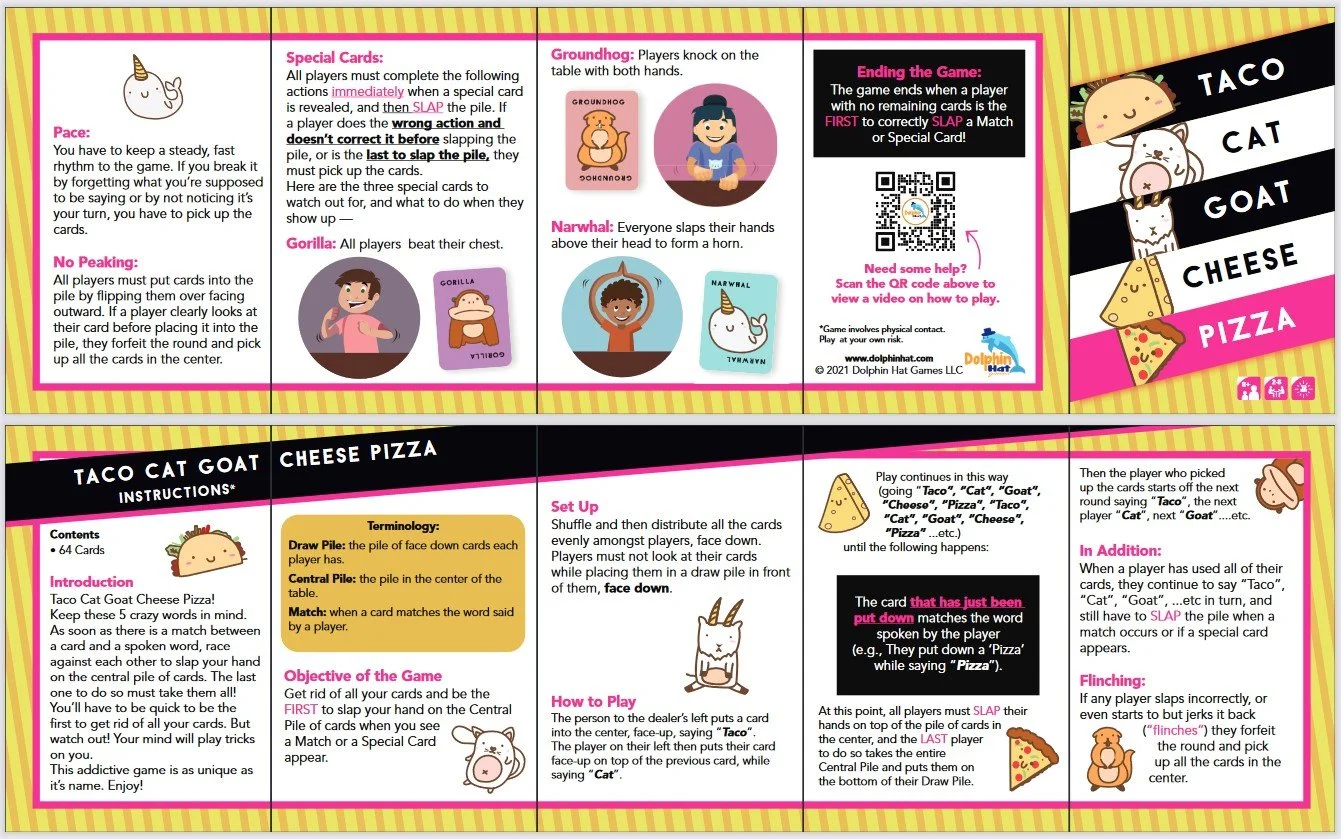
Complete guide to accessing, downloading, and understanding the official rules for Taco Cat Goat Cheese Pizza. Find free alternatives, video tutorials, and printable versions.
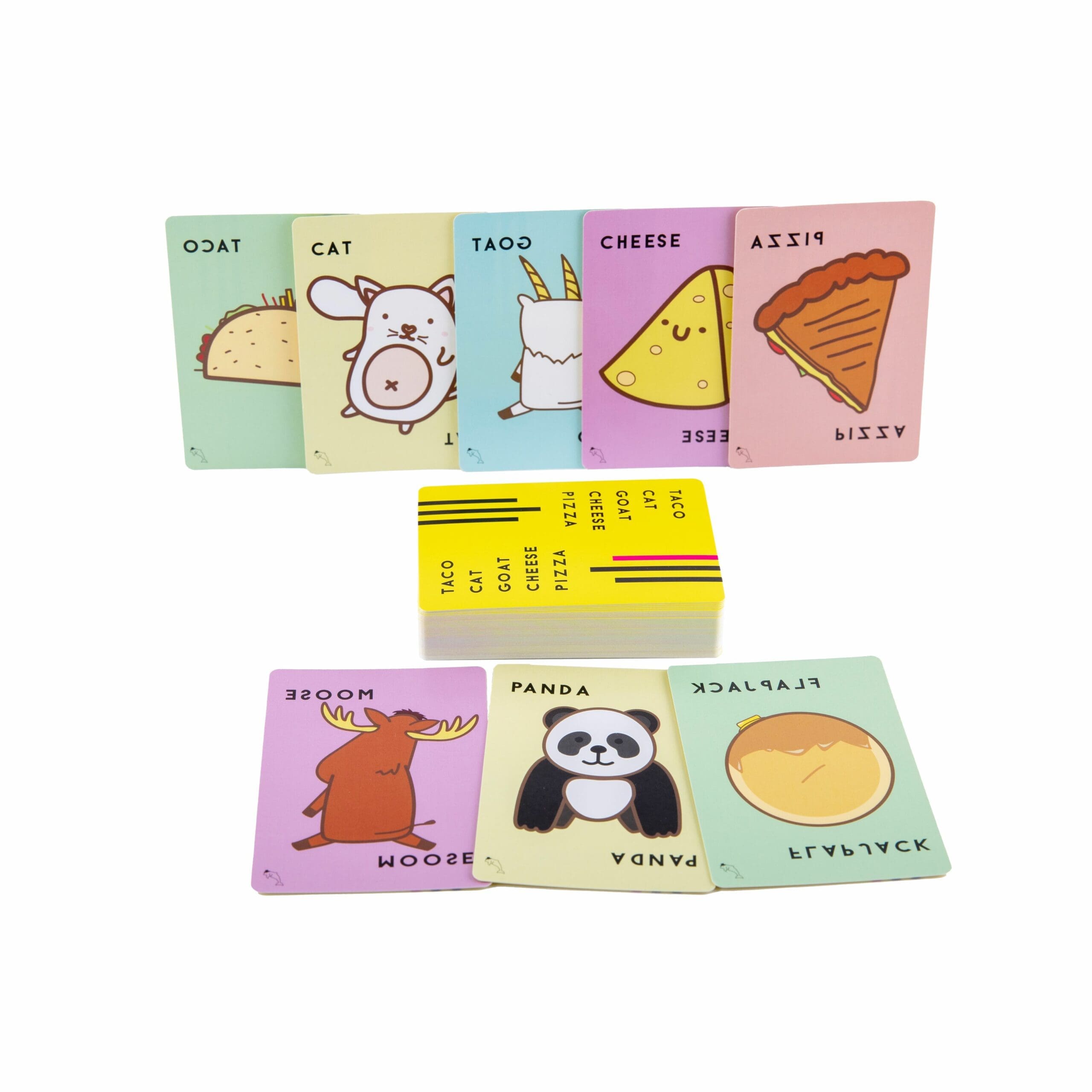
The main, most common alternative version of Taco Cat Goat Cheese Pizza is On The Flip Side.